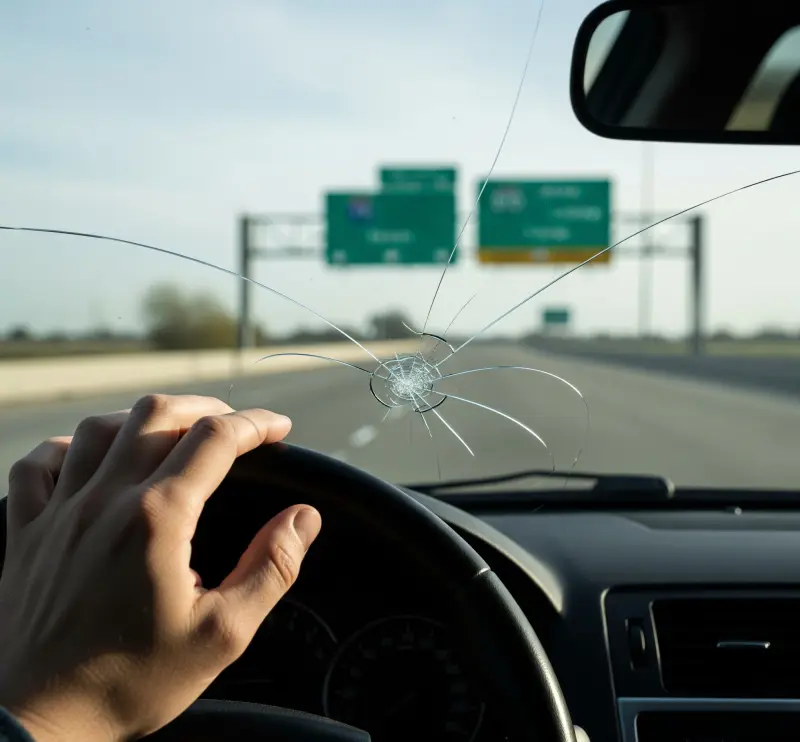
Houston’s climate can cause small chips to spread quickly during temperature changes, so prompt assessment is essential whether you choose insurance or out-of-pocket payment.
That tiny chip caught your eye this morning. Right in your line of sight.
You’re driving to work, mentally calculating what this unexpected surprise might cost. Should you go through insurance? Pay out of pocket? Will your rates go up if you file a claim?
For Houston commuters, auto glass damage is almost a rite of passage. Between construction zones, gravel trucks, and dramatic temperature shifts, windshield damage isn’t a matter of if but when. The real question is how to handle it in the most financially savvy way.

Auto glass repairs typically fall under comprehensive coverage, not collision. This distinction matters because comprehensive claims are sometimes treated differently by insurers.
If you only carry liability insurance (the minimum required in Texas), you won’t have coverage for auto glass repairs unless another driver caused the damage and accepts responsibility.
Texas insurance policies often have specific provisions for glass coverage:
Houston drivers face these same statewide insurance structures, though their risk exposure might be higher due to urban driving conditions.
Look for:
If unclear, call your insurance agent directly and ask these specific questions:

Your deductible is the amount you’ll pay out of pocket before insurance kicks in.
Your policy might list your comprehensive deductible as $500, but the actual amount for glass claims might differ:
The math is straightforward. If your repair will cost less than your deductible, there’s no financial benefit to filing a claim:
Remember, these figures are estimates only and can vary significantly based on your specific vehicle, its features, the repair shop, current market conditions, and many other factors:
The upfront savings from insurance might look appealing, but consider long-term implications.
Here’s a practical example: Filing a claim for a $600 windshield replacement with a $500 deductible saves you $100 immediately. But if your premium increases by $10 per month as a result, you’ll lose those savings after just 10 months – and continue paying more for years.
When calculating the true cost:
For many Houston drivers, especially those with otherwise clean records, weighing these potential long-term financial impacts against immediate savings is worth careful consideration.
Several factors can significantly alter your claim decision.
Some Texas policies offer special glass coverage that completely changes the financial equation:
Sometimes glass damage coincides with other issues:
Modern vehicles with advanced driver assistance systems (ADAS) with cameras and sensors mounted on the windshield require professional recalibration after replacement – an additional service that can add significant cost to repair.
Recalibration costs vary widely depending on the vehicle make, model, year, and the specific systems involved. While estimates often range from $250-500, actual costs could be higher or lower based on your specific vehicle and the service provider. This additional expense can sometimes push the total cost well above typical deductibles, potentially making insurance claims more financially beneficial for these advanced vehicles.
First, understand what you’re dealing with:
Small chips caught early can often be repaired rather than replaced, significantly changing the cost equation.
Run the numbers for your specific situation:
Consider your broader financial situation:
Regardless of financial calculations, promptly repairing certain glass damage is essential for safety:
For less urgent situations, let your financial analysis guide your decision:
Remember that Houston’s climate can cause small chips to spread quickly during dramatic temperature changes.
A: Under Texas insurance regulations, companies can consider claims when setting rates. However, many insurers have specific internal policies regarding glass-only claims. Some may not raise rates for a first glass claim, especially if you have been claim-free for several years. The actual impact varies significantly by insurance company, your driving history, and the insurer’s specific rating rules. For the most accurate information about potential rate impacts, speak directly with your insurance provider.
A: Look for terms like “full glass coverage,” “glass deductible waiver,” or “zero-deductible glass repair” in your policy documents. These provisions are sometimes listed under comprehensive coverage or as separate endorsements. Many drivers overlook these special provisions that might make insurance claims more beneficial. If your policy documents are unclear, call your insurance agent specifically asking about glass coverage deductibles and any special programs for windshield repair.
A: Absolutely. Modern vehicles with advanced driver assistance systems (ADAS) that use windshield-mounted cameras or sensors require recalibration after glass replacement. This specialized service can add significant costs to the total repair expense. The exact cost depends on your specific vehicle make, model, year, and the systems involved. Insurance typically covers calibration as part of the claim, potentially making insurance claims more financially advantageous in these situations, even with a moderate deductible.
A: Houston’s combination of extensive construction zones, gravel trucks on highways, and extreme temperature fluctuations creates a higher likelihood of glass damage incidents. This means Houston drivers might want to consider their glass claim decision not as a one-time choice but as part of a long-term strategy. Filing a claim for your first incident could potentially affect how future incidents are handled from an insurance perspective.
A: When shopping for new insurance in the competitive Texas market, insurers typically look at your claims history for the past 3-5 years. Multiple claims, even small ones, might cause some insurers to classify you differently during their risk assessment, potentially affecting your premium offers. This potential “hidden cost” of glass claims is rarely discussed but could impact your insurance options when you shop around.
A: Texas Department of Insurance regulations give consumers specific rights regarding glass repairs that many drivers don’t realize. These include the right to choose your repair facility (not just insurance-preferred shops), the right to OEM glass if specifically requested (though you may pay the difference), and protection against inferior repairs. Understanding these regulatory protections can significantly impact your claim experience and repair quality, regardless of whether you file through insurance.
When it comes to auto glass repair, timing is everything. Whether you’re dealing with a small chip or a full windshield replacement, Texan Glass & Solar Control offers a fast, eco-friendly, and convenient solution that helps maintain your vehicle’s value—without the stress.
With decades of experience serving drivers across Houston and surrounding areas, we’ve built a reputation for quality and reliability. Just ask David Sanderford:
“They did a great job on replacing my windshield. Nobody could find the glass I needed but they came thru and did an excellent job on the install. No air or water leaks and they were very nice! Would definitely recommend.”
Have questions about your deductible, glass coverage, or whether it’s time to file a claim? Let our experienced team help you make the right call.
Call 281-296-6200 Now to speak with our auto glass specialists or to schedule your repair.
Stay Connected for More Expert Tips
Love practical, locally-focused insights like this?
Follow Texan Glass & Solar Control for more tips on protecting your vehicle and getting the most from your insurance:
🔗 Facebook | Instagram | X | LinkedIn | YouTube | Pinterest
📍 Serving Houston, The Woodlands, Victoria, Corpus Christi, Katy, Conroe, Tomball, Splendora, Humble, Texas City, Beaumont, and nearby communities.