Why Houston Homeowners Are Ditching Framed Shower Enclosures
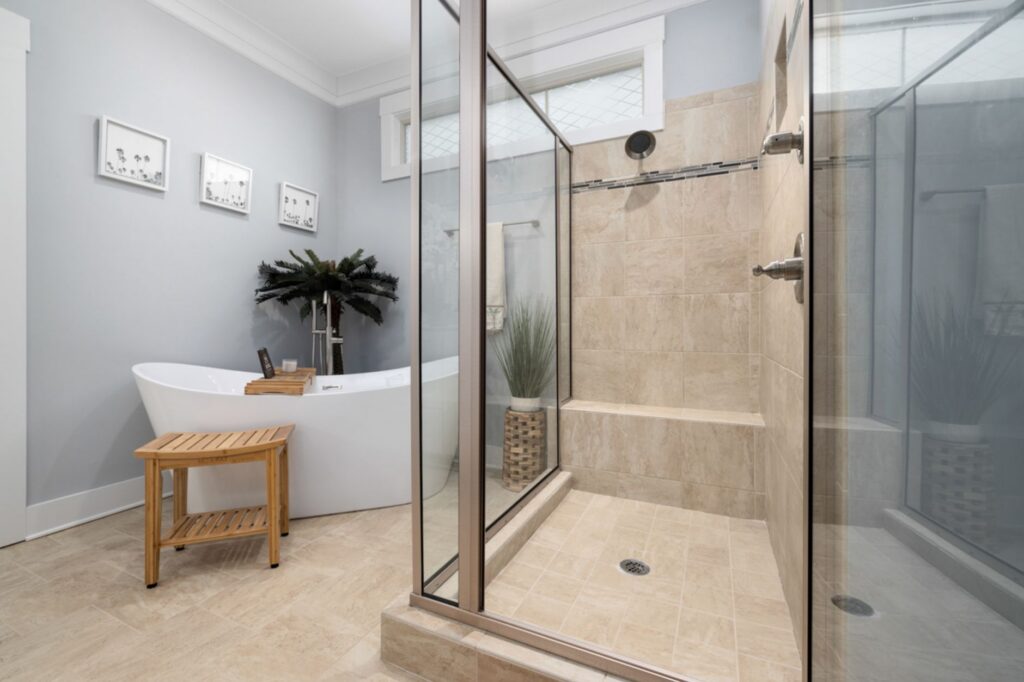
Walk into any recently remodeled bathroom in The Woodlands, Spring, or Katy, and there is a good chance you will find frameless or semi-frameless shower glass where a curtain rod or bulky aluminum frame used to be. The shift is not just about looks. Frameless glass showers are easier to clean, last longer, and they make a small bathroom feel significantly larger.
If you are planning a bathroom remodel or simply tired of scrubbing mildew off shower curtains and aluminum channels, this guide covers everything you need to know about custom shower glass options in the Houston area, including what makes each style different, how the measurement and installation process works, and why glass thickness and hardware choice matter more than most people realize.
Frameless vs. Semi-Frameless vs. Framed: What Is the Actual Difference?
These three terms get used interchangeably online, but they describe genuinely different products.
Frameless shower enclosures use thick tempered glass (typically 3/8 inch or 1/2 inch) mounted with minimal hardware directly to the wall or floor. There is no metal channel running along the top or bottom of the door. The look is clean, open, and modern. Because there are no tracks or frames for water and soap scum to collect in, they are also the easiest to maintain. The tradeoff is cost: frameless enclosures require heavier glass and more precise installation, so they sit at the higher end of the price range.
Semi-frameless enclosures use thinner glass (usually 3/8 inch) with a minimal frame around the stationary panels but a frameless door. You get most of the clean aesthetic at a somewhat lower price point. For homeowners who want the look without going fully frameless, semi-frameless is a strong middle-ground option.
Framed enclosures have aluminum channels along the full perimeter, including the bottom track and door edges. They are the most affordable option, but they accumulate grime quickly in the frame channels and tend to look dated. Most remodel projects replacing existing framed units opt for semi-frameless or frameless.
All three types use tempered safety glass, which is required by building code in wet areas. Tempered glass is processed with controlled thermal cycling that makes it roughly four times stronger than standard glass. If it does break, it shatters into small, relatively dull pieces rather than sharp shards. This is non-negotiable in any reputable installation.
Glass Thickness: Does 3/8 Inch vs. 1/2 Inch Actually Matter?
For frameless enclosures, glass thickness is one of the most important decisions you will make. Here is the practical breakdown:
3/8 inch glass is the minimum for frameless applications. It works well for standard-sized doors and panels, especially those with strong wall or ceiling supports. It is lighter and costs less, which makes it a popular choice for projects where the opening dimensions are within normal ranges.
1/2 inch glass is noticeably heavier and more rigid. It is the better choice for larger doors (anything over 36 inches wide), bypassing panel systems, and installations where extra structural mass helps dampen the swing of a heavy door. The heft also gives the enclosure a higher-end feel. When budget allows, most homeowners who invest in a full frameless system opt for 1/2 inch glass and rarely regret it.
The right choice depends on your specific shower dimensions, door swing direction, and hardware configuration. That is something a professional measurement visit will clarify before any glass is cut.
Custom Measurements: Why Off-the-Shelf Glass Never Fits Right
Standard shower enclosure kits from home improvement stores are built around nominal dimensions. Real bathrooms rarely match those dimensions exactly. Walls are out of plumb. Floors are not perfectly level. Older homes have tile work that adds irregular thickness to wall surfaces.
Custom-measured and fabricated glass solves all of this. The process works like this:
- Measurement visit: A technician comes to your home, takes precise measurements of the opening at multiple points (top, middle, bottom, and side to side), and checks for plumb and level. Any irregularities are noted so the glass can be cut to compensate.
- Fabrication: The glass is cut to exact dimensions, edges are polished, and any holes for hardware are drilled at this stage (you cannot drill tempered glass after the fact).
- Installation: Hardware is anchored to wall studs or backing, panels are set, the door is hung and adjusted, and seals are applied. A typical residential installation takes two to four hours depending on complexity.
From measurement to final installation, most projects at Texan Glass run two to three weeks, depending on glass availability and scheduling. Rush timelines are sometimes available for renovation projects with hard deadlines.
Hardware Finishes and Why They Matter More Than You Think
The hardware on a frameless shower enclosure is highly visible. Hinges, handles, clips, and towel bars should match or complement the rest of your bathroom fixtures. Available finishes include:
- Chrome: Classic, pairs well with traditional and transitional bathrooms. Shows water spots easily.
- Brushed nickel: Warmer tone, more forgiving on fingerprints and water spots. Works in most bathroom styles.
- Matte black: High-contrast look that photographs beautifully and pairs well with white or light tile. Popular in modern and farmhouse-style bathrooms.
- Oil-rubbed bronze: Rich, darker finish that complements warmer tile palettes and rustic or Spanish-style aesthetics.
Hardware selection is typically finalized at the measurement visit. If you are still deciding on other bathroom fixtures, it is worth having a finish direction in mind before scheduling, so everything ends up cohesive.
Walk-In Showers vs. Tub Surrounds: Different Installations, Same Standard
Walk-in showers and tub surrounds both benefit from frameless or semi-frameless glass, but the installation requirements are different.
Walk-in showers often use a combination of fixed panels and one or two doors. The layout depends on the shower dimensions and whether the entry is from the side or the end. Larger walk-in showers may use bypass (sliding) doors to avoid swing clearance issues.
Tub surrounds typically use a sliding door system because swing doors over a tub require significant bathroom floor space to open. Semi-frameless sliding systems work particularly well here, providing the cleaner look without the floor space requirement of a hinged door.
For custom tub surround installations, the bottom track design matters. The track needs to allow water to drain properly without creating a step hazard or an area where soap builds up. There are low-profile track options that address this better than older designs.
Scheduling Your Custom Shower Glass Consultation in The Woodlands
If you are in The Woodlands, Spring, Conroe, Katy, or anywhere in the greater Houston area, Texan Glass handles the full process in-house, from the initial measurement to fabrication to installation. There is no third-party subcontracting involved, which means better quality control and a more predictable timeline.
The consultation is free and takes about 20 minutes. A technician reviews the space, discusses glass and hardware options, and provides a quote. Most homeowners find that a custom frameless enclosure is more accessible than they expected, especially compared to the long-term cleaning and maintenance costs of framed alternatives.
You can see examples of completed shower glass installations and learn more about the full range of residential glass services at the Texan Glass shower page.
Ready to get started? Call (281) 296-6200 to schedule your free shower glass consultation in The Woodlands. The team can also be reached for locations throughout Houston, Grand Prairie, Corpus Christi, Beaumont, and the Rio Grande Valley.

![How Much Does Windshield Replacement Cost in Texas? [2026 Breakdown]](https://www.texanglass.com/wp-content/uploads/2026/08/windshield-replacement-texas-auto-glass-shop-150x150.png)