
Now Offering Flexible Financing! Click Get Started Today
Retrospective article, added September 17, 2026.
Most Texas drivers think of summer as the high-risk season for windshield damage. Hail season runs from spring through early summer. Highway debris is constant. The heat accelerates chip spreading. But winter in Texas creates a different set of windshield hazards that catch many drivers off guard, particularly in years when hard freezes, ice storms, and rapid temperature swings hit the state.
Windshields can crack or develop new damage during cold weather for reasons that are different from summer heat damage. Understanding those causes, and knowing what to do when winter weather produces a crack, helps Texas drivers respond appropriately instead of making things worse.
Glass expands and contracts with temperature changes. Windshields are laminated safety glass, with two glass layers bonded through a plastic interlayer (PVB). When temperatures drop sharply, the glass contracts. When temperatures rise again, it expands. These thermal cycles are normal and windshields are designed to tolerate them.
The problem is that existing damage creates stress concentration points. A chip that would have stayed stable through mild temperature variations becomes a crack when a hard freeze causes the glass to contract sharply. The physics work against you: the PVB interlayer contracts at a different rate than the glass layers, and the edges of a chip or pre-existing crack are the weakest points in that stress transfer.
Several cold-weather factors specifically affect Texas windshields:
Rapid temperature drops. Texas cold fronts can drop temperatures by 30 to 40 degrees Fahrenheit within a few hours. A windshield that is warm from daytime sun exposure and then exposed to a rapid overnight freeze is more likely to develop stress cracks than one that cools gradually. The faster the temperature change, the more severe the thermal stress on the glass.
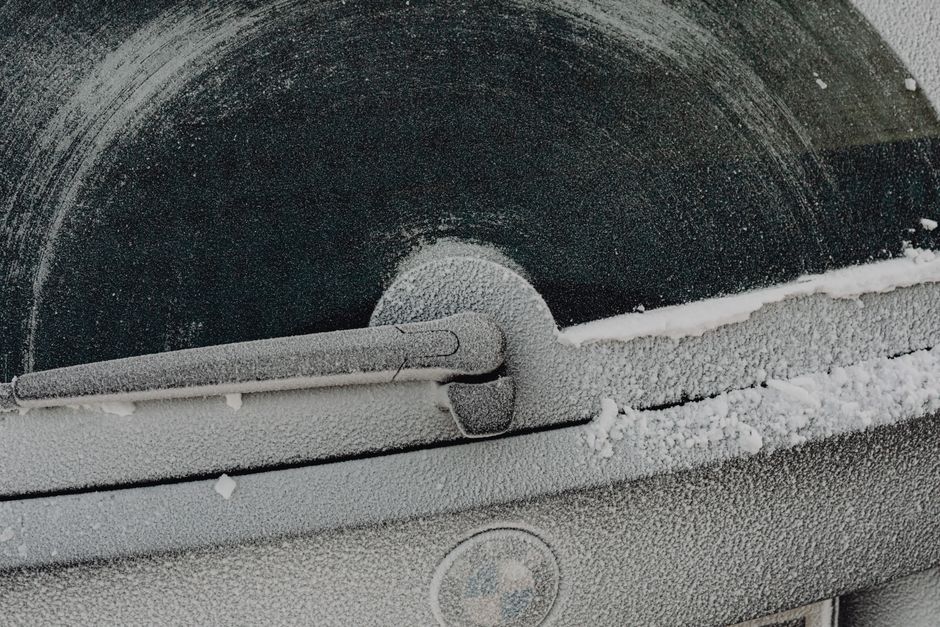
Freezing rain and ice. Ice storms in Texas, while less frequent than in northern states, cause significant windshield damage. The weight and adhesion of ice on the windshield is not itself a crack risk, but the methods drivers use to remove it often are. Scraping aggressively, particularly with metal tools or improvised implements, scratches and chips the glass. Pouring hot water on a frozen windshield is one of the most effective ways to crack it. The thermal shock of very hot water hitting very cold glass often causes instant cracking, particularly on windshields that already have any damage.
Defroster misuse. Setting the defroster to maximum heat when the windshield is frozen creates a steep temperature gradient across the glass. The interior surface heats while the exterior remains cold. This thermal differential creates stress across the glass, and pre-existing chips or cracks are the most likely locations where that stress produces new cracks.
Protecting your windshield during Texas winter weather is primarily about avoiding the common mistakes that cause damage:
Do not pour hot water on a frozen windshield. The thermal shock risk is real, and the result is often a cracked windshield. Use lukewarm water at most, and only if the windshield does not have existing damage.
Use a proper ice scraper with a plastic blade. Plastic scrapers are designed to remove ice without scratching the glass. Metal tools, credit cards, and improvised scrapers are not.
Start the defroster on a low setting first. Let the interior warm gradually before increasing defroster heat. This reduces the temperature differential across the glass during the initial warm-up period.
Park facing east when possible. Morning sun on the windshield will help defrost naturally without requiring hot water or aggressive scraping. This is not always practical but is the gentlest method for the glass.
Cover the windshield overnight before a freeze. A windshield cover or folded cardboard under the wipers can prevent ice from forming on the glass entirely, eliminating the need for scraping in the morning.
If your windshield develops a new crack after a freeze or cold snap, assess it using the standard criteria before assuming replacement is required.
Cracks shorter than 6 inches that are not in the driver’s primary sightline and have not reached the edge of the glass can often be repaired by injecting clear resin. Cold-weather cracks that start from an existing chip are particularly good candidates for repair if caught before moisture and debris contaminate the crack.
Cracks that start at the edge of the windshield, however, usually cannot be repaired and require full replacement. Edge cracks are common in cold-weather situations because the edge of the glass experiences the highest stress concentration during thermal contraction. Once an edge crack begins, it typically propagates quickly across the windshield.
For more on when repair is appropriate versus replacement, see Texan Glass’s guide to repair vs. replacement.
Windshield damage caused by ice storms, freeze events, and cold-weather cracking is typically covered under Texas comprehensive auto insurance. Comprehensive coverage handles glass damage that is not the result of a collision, which includes weather events. If Texas experiences a winter storm that causes widespread windshield damage, insurance claims can be processed even when the damage appears to be unrelated to a specific impact event.
Document the damage with photos before the vehicle is moved or the windshield is cleaned. If the damage is clearly connected to a freeze event, note the date and conditions. Texan Glass works with all major insurance carriers in Texas and can assist with claim documentation at the time of your appointment. For more on insurance coverage, see the Texan Glass insurance guide for Texas drivers.
Do not wait to assess cold-weather windshield damage. Cracks that appear after a freeze will continue to propagate, particularly when the temperature cycles between freezing and above-freezing during the same weather event. A crack that starts at 4 inches on a Monday morning may be 12 inches by Wednesday if the cold weather continues with overnight freezes and daytime warmth.
Texan Glass operates at 8 locations across Texas, including The Woodlands, Houston South, Dallas, Fort Worth, Beaumont, Corpus Christi, Victoria, and the Rio Grande Valley. Same-day service is available at most locations for repairs and many replacement jobs. Visit texanglass.com to find your nearest location and schedule an appointment.