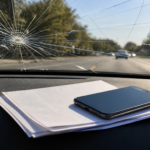
How Rock Chips Spread: Why Immediate Repair Saves Texas Drivers Money
A rock chip in your windshield is never just a cosmetic problem. Texas drivers deal with road debris year-round, and the chip that appears on your drive home today is already under mechanical pressure that will cause it to spread. Understanding why chips spread, how fast it happens, and what it costs to ignore it gives you the information you need to make a fast, smart decision.
The Physics of a Spreading Chip
Your windshield is laminated safety glass: two layers of tempered glass bonded to a polyvinyl interlayer. When a rock strikes the outer glass layer, it creates a fracture in the glass. The fracture may be small, contained, and stable at the moment of impact. But stability does not last.
Glass expands in heat and contracts in cold. In Texas, this cycle happens daily. Morning temperatures in the 70s, afternoon temperatures in the high 90s, and then the blast of cold air conditioning inside your vehicle every time you get in creates thermal cycling at the fracture point. Each cycle flexes the glass slightly at the chip, and the fracture extends a little further with each cycle.
Road vibration adds to it. Every bump, pothole, and expansion joint in Texas roads transmits a stress pulse through the vehicle frame and into the windshield glass. A chip creates a stress concentration point where those pulses focus. Cracks propagate outward from stress concentration points.
And then there is the direct pressure of driving. At highway speed, the aerodynamic pressure differential across the windshield is significant. At 75 mph on a Texas highway, your windshield is under continuous load. A chip near the edge of the glass, where the frame applies the most pressure, will spread fastest.
How Fast Do Chips Spread?
The honest answer is that it depends on the size, location, and depth of the chip, and on Texas weather. A small bullseye chip in the middle of the windshield, well away from the edges, may stay stable for weeks in mild weather. A crack that has already started from the chip can spread from three inches to across the entire windshield in a single day when temperatures swing sharply.
The conditions most dangerous to a fresh chip in Texas:
- Turning on the air conditioning at full blast directly at the windshield on a hot day
- Parking on black asphalt in direct summer sun, then starting the car and immediately driving
- Rain on a hot windshield
- Driving on rough roads or highway expansion joints
Any of these can push a repairable chip into a crack that requires full replacement before you get home.
The Cost Difference: Repair vs Replacement
This is where the urgency becomes financial rather than just practical.
Chip repair: $50 to $100 for most vehicles. Takes 20 to 30 minutes. In most cases covered at zero cost under comprehensive insurance with full glass coverage.
Windshield replacement: $200 to $600 for most standard vehicles. Up to $900 or more for vehicles with ADAS requiring recalibration. Takes 45 to 90 minutes plus cure time. Covered under comprehensive insurance but subject to your deductible.
For a driver with a $500 deductible, a chip that spreads into a crack requiring replacement costs $500 out of pocket that did not need to be spent. A chip caught early, even if it is not covered by insurance, costs $75 at most.
The math is simple. Every day a chip goes unrepaired is a day it can spread into a crack. Once it cracks beyond three inches, the repair window is closed.
When Is a Chip No Longer Repairable?
Chip repair has specific limits. Damage that is outside those limits requires full replacement regardless of the driver’s preference.
- Cracks longer than three inches cannot be repaired
- Chips in the driver’s direct line of sight (within the wiper sweep, in the middle of the glass) may not be repairable because the resin repair process can leave optical distortions that impair visibility
- Chips at the glass edge are generally not repairable because the structural compromise extends to the frame bond
- Chips that have accumulated dirt, moisture, or debris over weeks or months often do not accept repair resin cleanly
Texan Glass will evaluate your chip and give you a straight assessment. If it is repairable, we recommend repair. If it has already passed the threshold, we will tell you clearly why and walk you through the replacement process and insurance options.
Get Your Chip Fixed Today at Texan Glass
Texan Glass provides same-day windshield chip repair at all Texas locations, including mobile service that comes to your home or workplace. Do not let today’s chip become next week’s replacement bill.
Visit our auto glass services page, find your nearest location at our locations page, or contact us to schedule. Call The Woodlands at (281) 296-6200 or Houston South at (713) 592-5599. We will take care of it fast before it becomes expensive.