The energy-saving window glass is the luxury of the past, but now it is the necessity of the modern home owner, who needs to save on the energy costs, enhance the comfort levels indoors, and raise the property value. No matter what you are constructing a new house or refurbishing the existing windows, knowing the mechanism of energy saving glass will enable you to make a more intelligent decision.
Special types of window glass are used as energy efficient, and they help to minimize the amount of heat that escapes your home. It has hi-tech coatings and many layers to maintain the temperature of your indoors all year round as opposed to the traditional glass.
This means:
| Glass Type | Key Feature | Best For | Energy Efficiency Level | Cost Range | Additional Benefits |
|---|---|---|---|---|---|
| Low-E Glass | Reflects heat with metallic coating | Hot & mixed climates | ⭐⭐⭐⭐☆ | Medium | UV protection, improved insulation |
| Double Glazing | Two panes with insulating gas | Moderate climates | ⭐⭐⭐⭐☆ | Medium | Noise reduction, better insulation |
| Triple Glazing | Three panes with gas fill | Extreme climates | ⭐⭐⭐⭐⭐ | High | Maximum insulation, superior comfort |
| Tinted Glass | Reduces glare and solar heat | Sunny regions | ⭐⭐⭐☆☆ | Low–Medium | Privacy, glare reduction |
| Reflective Glass | Reflects sunlight outward | Very hot climates | ⭐⭐⭐⭐☆ | Medium–High | Modern look, reduces cooling load |
| Laminated Energy Glass | Layers with interlayer for insulation | Urban areas | ⭐⭐⭐⭐☆ | Medium | Safety, soundproofing |
| Gas-Filled (Argon/Krypton) | Gas between panes improves insulation | All climates | ⭐⭐⭐⭐⭐ | Medium–High | Boosts performance of double/triple glass |
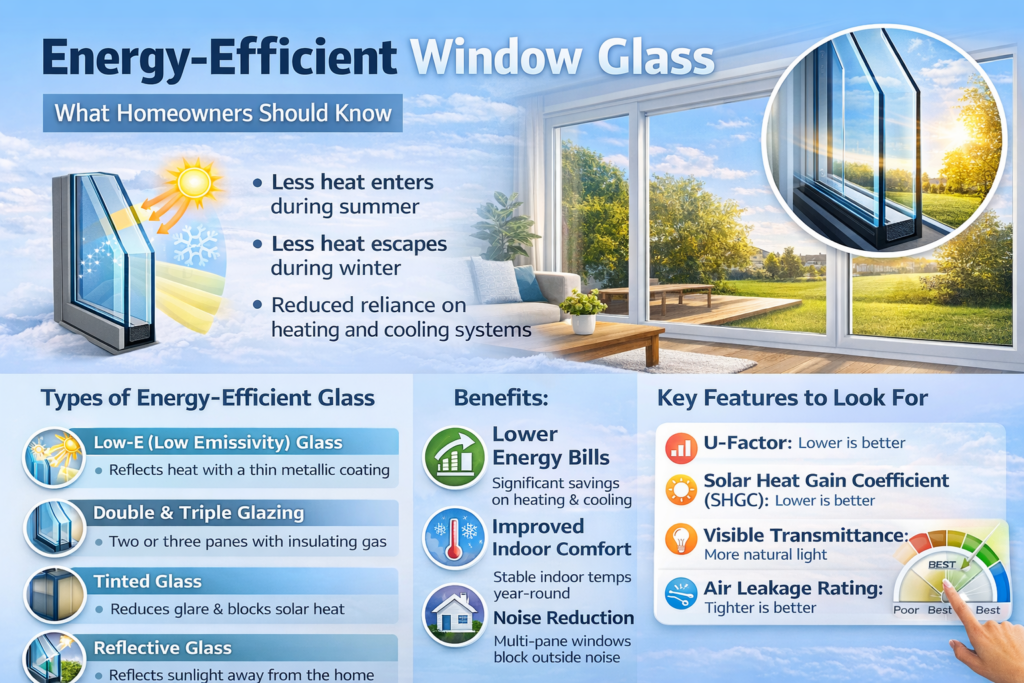
Low-E glass is a light reflective metallic coating that is applied to block heat and transfers natural light.
Benefits:
These windows include two or three glasses with a filled-in space between the glasses (usually argon or krypton).
Benefits:
Colored glass has a lesser amount of glare and some sunlight heat is filtered.
Benefits:
The reflective surfaces reflect sunlight off the window surface.
Benefits:
Key Features to Look For
These performance indicators will require you to watch when selecting low-energy consumption window glass:
Your HVAC system doesn’t need to exert so much effort by minimizing the heat transfer so systems save a lot of cash.
No longer freezing or hot windowsills in winter.
Consumption of fewer energy saves on your carbon footprint and it also helps in sustainability.
Multi-pane windows are also effective in blocking outside noise hence making the inside environment quieter.
Buyers are desirous of energy-efficient upgrades that can enhance the resale value.
Energy-efficient glass is most appropriate in a situation where it is positioned strategically in:
Although energy efficient windows might be more expensive in the short term, it is compensated by:
Consider it as an investment and not an expense.
In case you are going to upgrade your windows, look at professional solutions at Texan Glass. They have a professional crew who provides quality energy-saving window jobs that aim at making the building more insulated, comfortable, and economical in terms of utility. The right glass today would guarantee savings in the long-term and make living in the house more environmentally friendly.
Smart upgrade is the use of an energy-efficient window glass that improves the comfort level, consumes less energy and provides value to your home. There are several solutions with various options, such as Low-E coating and a double-glaze where you can tailor the solutions to your climate and requirements. The correct decision made today will see one living more easily and at a lower price tomorrow.