For business owners who run fleets of commercial vans and work trucks in Texas, auto glass damage is not just an inconvenience. It is a safety issue, a compliance issue, and a productivity issue that affects your drivers, your vehicles, and your schedule. Getting commercial glass service right requires a provider who understands fleet work, not just retail windshield replacement. Here is what Texas business owners need to know about keeping their commercial vehicles road-ready.
Why Commercial Vehicle Glass Is a Different Category
A commercial van or work truck is not driven like a personal vehicle. It accumulates more miles, carries heavier loads, operates on more varied terrain, and often sits in outdoor environments for extended periods. All of those factors accelerate windshield wear and increase the frequency of chips, cracks, and glass damage across a fleet.
Beyond the frequency of damage, commercial vehicles also have specific compliance considerations. In Texas, as in other states, a vehicle with a cracked or damaged windshield that obstructs the driver’s view is not compliant with commercial vehicle operating standards. For businesses with DOT-regulated vehicles, this is particularly important since a driver operating a non-compliant vehicle can face inspection violations that affect your business’s safety record.
Commercial vans and trucks also tend to have larger windshields and different glass profiles than passenger vehicles, which means not every shop stocks the glass you need. Having a reliable auto glass provider who can source the correct glass for your fleet vehicles is essential for minimizing downtime.
Common Commercial Vehicles and Their Glass Considerations
The most common commercial vehicles requiring auto glass service in Texas include:
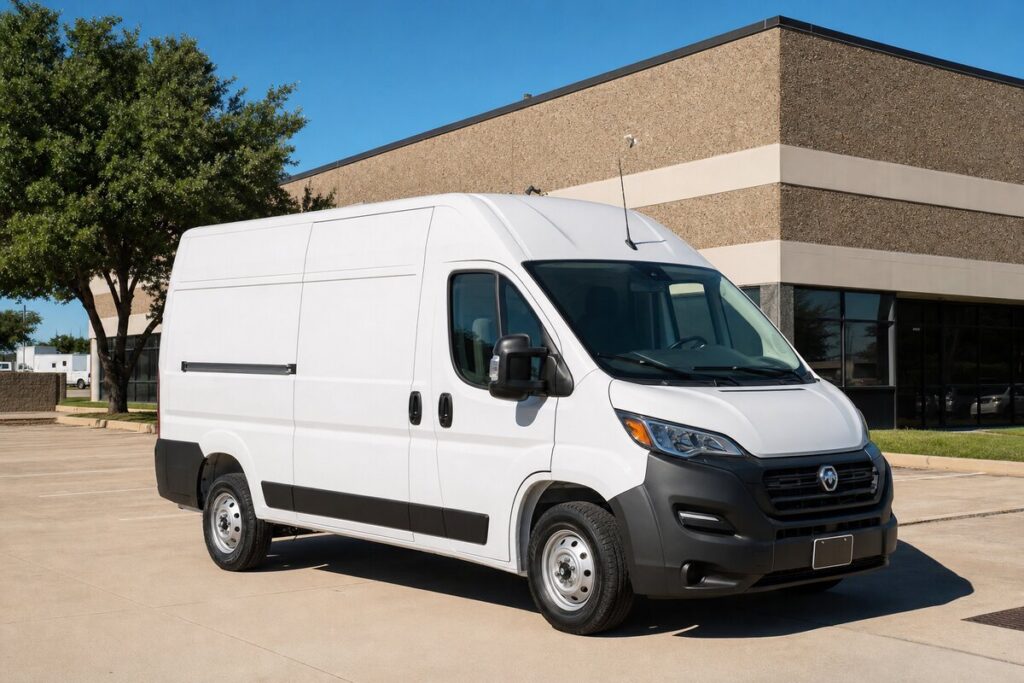
Cargo vans (Ford Transit, Ram ProMaster, Mercedes Sprinter): These are the most common commercial vehicles in service across Texas. They have large windshields and, on newer models, increasingly integrate ADAS camera systems. The Sprinter in particular often requires calibration after windshield replacement due to its camera-based driver assistance features.
Light-duty pickup trucks (Ford F-150/F-250/F-350, RAM 1500/2500, Chevrolet Silverado): Work trucks are everywhere in Texas, and they take a beating. Chips from gravel and debris on job sites are extremely common. Most current-generation pickups have forward-facing cameras that require calibration after windshield replacement.
Cutaway vans and box trucks: These vehicles tend to have simpler glass profiles without as many integrated sensor requirements, but sourcing the correct glass still requires a provider with commercial inventory or reliable ordering capability.
Utility vehicles and service trucks: Depending on the configuration, these may have modified or specialty glass that requires specific sourcing.
Managing Glass Repairs Across a Fleet
For businesses with multiple vehicles, managing windshield repairs reactively, meaning you wait until a vehicle is sidelined by damage, is the most expensive approach. A more effective strategy includes:
Prompt chip repair before cracks develop: A chip that gets repaired within the first few days costs a fraction of a full windshield replacement. Establishing a policy that drivers report and schedule chip repairs immediately prevents small damage from becoming expensive replacements. Most chip repairs can be completed in under an hour without taking the vehicle out of service for the rest of the day.
Scheduled glass inspections: Including windshield condition in your regular fleet inspection checklist helps you catch early damage before it reaches the point of failure or compliance risk.
Working with a provider who can handle mobile service: For fleets, mobile auto glass service, where the technician comes to your job site, yard, or facility, reduces the time your vehicles are out of rotation. Not every auto glass shop offers genuine fleet-ready mobile service, so confirm capability before committing to a provider.
Insurance and Fleet Billing for Commercial Glass
Most commercial vehicle insurance policies include glass coverage, though the specifics vary by policy and carrier. For businesses managing multiple vehicles, it is worth reviewing your commercial auto policy to understand:
- Whether glass claims are subject to your deductible or handled separately
- Whether your policy covers OEM glass or aftermarket only
- The claims process for fleet vehicles versus individually registered vehicles
Some fleet operators choose to self-pay for minor glass repairs rather than filing claims, particularly for chip repairs, to avoid any potential impact on premiums. This is a business decision that depends on your policy terms and claim history.
Getting Your Commercial Fleet Served in Texas
Texan Glass serves business owners and fleet operators across the Houston metro area. Whether you need a single van windshield replaced or you’re managing glass service across a larger fleet, we can help keep your vehicles compliant and on the road. We serve the Spring area through our Spring auto glass location and the broader Houston metro at our Houston auto glass service center.
Visit texanglass.com to get started with a quote for your commercial vehicle or fleet. We will work with your schedule to minimize downtime and get your drivers back on the road.