
Now Offering Flexible Financing! Click Get Started Today
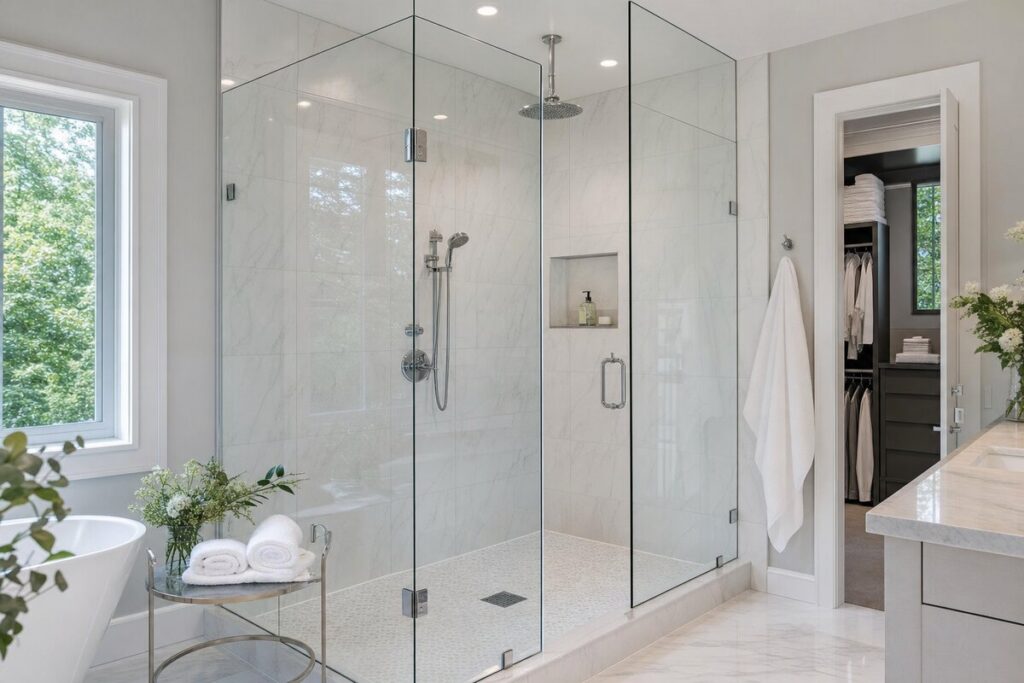
Frameless shower glass looks clean and modern, but it requires a different maintenance approach than framed or semi-frameless enclosures. Without metal frames to catch and hide mineral deposits, every water spot and soap film streak is visible directly on the glass. The good news is that keeping frameless shower glass in great condition is straightforward once you understand what causes the buildup and how to clean it without damaging the surface. Here is what you need to know.
The primary culprit in shower glass buildup is hard water. In the Houston area and across much of Texas, tap water contains elevated levels of dissolved minerals, particularly calcium and magnesium. Every time water contacts the glass and evaporates, it leaves behind a thin film of mineral deposits. Over time, these deposits accumulate into the white or hazy buildup commonly called hard water scale.
Soap scum is a separate layer that forms when soap reacts with the same minerals in hard water, creating an insoluble residue that bonds to the glass surface. The combination of soap scum and mineral scale is what makes heavily neglected shower glass look foggy or permanently stained.
Body oils and shampoo residue add a third layer of buildup that sits on top of the mineral and soap layers. Because frameless glass is typically smooth and unobstructed, all of this is visible in a way that frames and metal profiles would partially conceal.
The easiest maintenance strategy is one that takes less than two minutes after every shower. These habits dramatically reduce how often you need to do a deeper clean:
Squeegee after every use: A simple rubber squeegee removes most of the water from the glass surface before it can evaporate and leave mineral deposits. Start at the top and work downward in overlapping strokes. This one habit alone significantly extends the time between deep cleanings.
Brief rinse with cold water: After squeegeeing, a quick rinse with slightly cooler water helps clear any remaining soap residue from the surface.
Ventilate the bathroom: Running your exhaust fan during and for at least 15-20 minutes after your shower reduces the humidity that allows water to sit on glass surfaces and evaporate slowly. Less moisture in the air means less condensation forming on glass that you might not even see.
Apply a water repellent treatment periodically: Products that create a hydrophobic surface on the glass cause water to bead and run off rather than spreading into thin films that leave deposits. These treatments need to be reapplied periodically, but they make daily maintenance significantly easier.
For glass that already has buildup, a targeted cleaning approach works better than standard bathroom sprays, which are not formulated to dissolve mineral scale effectively.
For light buildup: White distilled vinegar diluted with water (roughly one part vinegar to one part water) is effective against early-stage mineral deposits. Apply it to the glass, let it sit for 5-10 minutes, then scrub gently with a non-abrasive sponge or cloth and rinse thoroughly. Vinegar is acidic and dissolves calcium deposits effectively without scratching glass.
For moderate buildup: A paste made from baking soda and a small amount of dish soap can be applied with a soft cloth and worked gently into the affected areas before rinsing. For persistent spots, a commercial limescale remover formulated for glass is more effective than DIY solutions.
What to avoid: Steel wool, abrasive scrubbing pads, and acidic cleaners left on the glass for extended periods can scratch or etch the surface. Frameless shower glass is typically tempered, which is extremely hard and impact-resistant, but the surface can still be scratched by abrasive materials. Also avoid ammonia-based cleaners on glass near any metal hardware, as they can cause discoloration over time.
Frameless shower enclosures rely on hinges, handles, and door seals to function correctly. These components need attention too:
Hinges: Clean the exterior of hinges with a damp cloth to remove soap and mineral buildup. Avoid spraying cleaning products directly into hinge mechanisms.
Seals and sweeps: The rubber or vinyl seals at the bottom and sides of frameless doors prevent water from leaking onto the bathroom floor. Check them periodically for cracking, stiffening, or detachment. Worn seals can usually be replaced without replacing the entire enclosure.
Handles and hardware: Most frameless shower hardware is stainless steel or chrome. Dry it after cleaning to prevent water spotting on the metal.
For Houston homeowners interested in installing or upgrading a frameless shower enclosure, Texan Glass installs and services frameless shower glass across the area. You can learn more about our shower glass services, and we also serve communities throughout the metro including through our Spring shower door location.
Some issues go beyond routine maintenance:
A consistent maintenance routine keeps frameless shower glass clear and presentable without much effort. If your enclosure needs repair, replacement, or if you are ready to upgrade to a frameless shower in your Houston area home, Texan Glass can help. Visit texanglass.com to learn more about our shower glass installation and service options.