
Now Offering Flexible Financing! Click Get Started Today
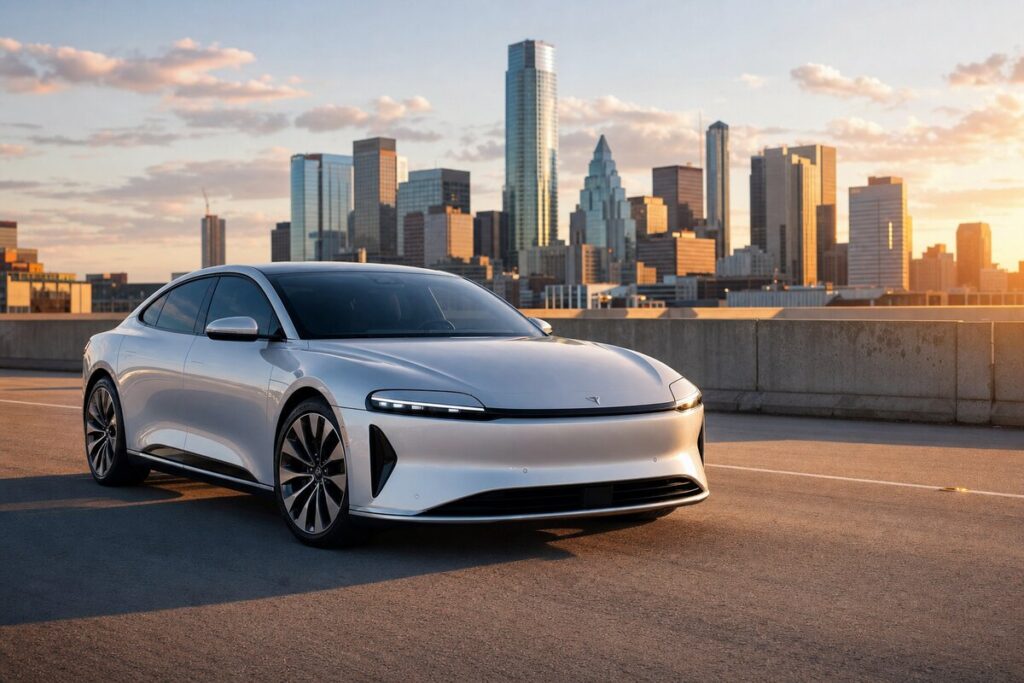
Replacing the windshield on an electric vehicle is not the same process as replacing the glass on a conventional car or truck. EV windshields are often engineered with additional features built into the glass itself, including camera systems, heads-up display compatibility, acoustic lamination, and rain sensors. Getting the replacement right requires the correct glass, proper installation, and in most cases a camera calibration afterward. Here is what Texas EV owners need to know before scheduling a windshield replacement.
Electric vehicles, particularly newer models from Tesla, Ford, Rivian, Lucid, and GM, integrate a significant amount of technology into or behind the windshield. The most common additions include:
Forward-facing cameras: Systems like Tesla Autopilot, Ford BlueCruise, GM Super Cruise, and standard ADAS packages on most new EVs rely on cameras mounted at or near the top of the windshield. These cameras control features like automatic emergency braking, adaptive cruise control, lane keeping, and traffic-aware driving. Replacing the windshield disturbs the camera’s calibration and often its mounting position.
Heads-up displays (HUD): Many EVs project navigation, speed, and driver alerts onto the windshield. HUD-compatible glass has a specific optical wedge angle engineered into it. If you replace a HUD windshield with standard glass, the projected image will appear doubled or distorted. You need HUD-compatible glass for the system to work correctly.
Acoustic lamination: EVs are quiet by nature, with no engine noise to mask road and wind sound. Many manufacturers use acoustic-laminated windshields to reduce cabin noise, particularly at highway speeds. This is a thicker, sound-dampening interlayer in the glass itself, and it needs to be matched in the replacement.
Rain sensors and heating elements: Some EVs include rain-sensing wipers or heated wiper rest areas built into the lower portion of the glass, requiring compatible replacement glass.
For conventional vehicles, aftermarket glass from reputable suppliers often performs comparably to original equipment manufacturer glass. On EVs, the gap between OEM and aftermarket is typically wider. The reason comes down to tolerances: camera mounts, HUD angles, and acoustic properties need to match the original specifications precisely for the technology to function correctly.
Using the wrong glass grade on an EV can result in:
In some cases, Tesla and other manufacturers specify OEM glass as a requirement for warranty compliance on camera-integrated systems. Always confirm glass grade with your technician before the job begins.
This is the step that catches many EV owners off guard. After any windshield replacement on a vehicle with forward-facing cameras, those cameras need to be recalibrated so that the ADAS systems function accurately. Calibration tells the camera exactly where it is positioned relative to the vehicle’s centerline, height, and pitch, information it uses to calculate braking distances and lane positions.
Calibration is typically performed one of two ways:
Static calibration: The vehicle is positioned in a controlled indoor environment with calibration targets placed at specific distances and angles. The vehicle’s diagnostic system runs the calibration routine using those targets. This can usually be completed in under an hour at a properly equipped shop.
Dynamic calibration: The vehicle is driven at specific speeds on roads with clear lane markings while the system auto-calibrates using real-world data. Some vehicles require dynamic calibration only, and others require both static and dynamic.
If you skip calibration after windshield replacement, your ADAS features may be disabled, function inaccurately, or give false warnings. On a vehicle where you rely on those systems, this is a real safety concern.
Texan Glass handles calibration as part of the windshield replacement process for vehicles that require it. If you are in the Houston metro, the team at our Houston auto glass location can assess your specific vehicle’s requirements. We also serve EV owners across the region, including The Woodlands and surrounding communities.
Before you schedule an EV windshield replacement in Texas, confirm these details with your service provider:
These are not unreasonable questions, and a reputable shop will answer them directly without hesitation.
Texas has one of the fastest-growing EV adoption rates in the country, with the Houston area, Dallas-Fort Worth, and Austin all seeing significant increases in EV registrations. That growth means auto glass shops are increasingly equipped to handle EV-specific requirements, but not all of them are. When choosing a provider, ask specifically about their experience with your vehicle make.
Texas heat is also a factor. Extreme summer temperatures accelerate chip-to-crack progression, and EV windshields are no less susceptible. If you have a chip on your EV windshield, getting it repaired promptly can often avoid a full replacement and the calibration cost that comes with it.
Texan Glass serves EV and conventional vehicle owners across the greater Houston area and beyond. We handle windshield replacement, chip and crack repair, and camera calibration for vehicles that require it. Visit texanglass.com to get started with a quote for your electric vehicle.